AMC Bridge’s client, a leading research and engineering organization supporting national security missions, operates in an environment defined by highly complex, engineer‑to‑order system development. As programs became more dynamic and interdisciplinary, the organization faced increasing challenges with fragmented data, disconnected tools, and limited visibility across engineering, manufacturing, and testing. Traditional PLM approaches were insufficient to support evolving requirements, iterative development, and system-level coordination. To enable faster, more informed decision-making and prepare for scalable AI adoption, the client sought to establish a connected digital engineering environment built on structured data, interoperability, and a continuous digital thread across the lifecycle.
-
Client Benefits
- Established a unified digital thread connecting engineering, manufacturing, and test across the lifecycle
- Enabled real-time visibility into system state, improving speed and quality of engineering decisions
- Achieved end-to-end traceability from requirements through design, build, and validation
- Minimized manual coordination and fragmented workflows across teams and systems
- Built a scalable, structured data foundation for AI data readiness and implementation
-
Project Highlights
- Designed and implemented a system engineering–driven digital thread architecture
- Integrated CAD, simulation, PLM, ERP (SAP), and test systems into a unified workflow
- Extended PLM with system engineering capabilities for planning, traceability, and AI&T
- Delivered flexible, visual program planning and execution workflows with rapid adaptability
- Applied an agile, SME-driven delivery model with rapid iteration and continuous feedback
-
Why AMC Bridge?
- System engineering–first consulting approach, grounded in real-world engineering practice
- Strong track record enabling AI data readiness and implementation in complex environments
- Deep expertise in complex, multi-domain engineering systems and architectures
- Proven ability to deliver interoperable digital thread solutions at enterprise scale
- Teams combining functional domain expertise with technical execution capability
Client
The client is a leading research and development organization focused on solving complex technical and operational challenges through innovation. Its activities include advanced technology research, system prototyping, and applied engineering across a range of strategic domains. By partnering with government stakeholders, industry, and academia, the organization helps transform emerging technologies into practical solutions that deliver mission-critical impact.
The Challenge: Complexity, Fragmentation, and AI Readiness
Client programs operate within a level of complexity that traditional PLM and digital engineering approaches struggle to support.
This complexity includes:
- Multiple engineering disciplines working in parallel (systems, mechanical, electrical, software, test)
- Continuously evolving requirements and system architectures
- Non-linear, many-to-many traceability between requirements, design, and validation
- Iterative prototyping with frequent design changes and branching configurations
- Distributed data across disconnected tools and formats
This complex and challenging environment places a premium on:
- Supporting traceability across lifecycle stages
- Eliminating manual coordination between teams and systems
- Preventing fragmentation of engineering knowledge
- Providing clear visibility into the real system state
The introduction of AI adds urgency to addressing these process challenges. While AI promises significant—potentially transformative—improvements in engineering work, it depends on a strong operational foundation. In complex environments, this places a premium on supporting traceability, eliminating manual coordination, preventing fragmentation of engineering knowledge, and providing clear visibility into the real system state. AI systems are particularly sensitive to disjoined, inconsistent, or incomplete data; without resolving these issues, they struggle to produce reliable outputs or deliver sustained production value—even when large volumes of unstructured data are available.
For the client, it became clear that AI could not be layered on top of fragmented systems. Instead, data structure and interoperability had to come first.
The Vision: Digital Engineering Driven by Continuous Insight
With active participation from AMC Bridge, the client defined a vision for digital engineering centered on continuous, real-time understanding of system state:
- Persistent, real-time visibility into system state
- A connected, authoritative source of truth
- Early identification of risks
- Rapid response to evolving requirements
This vision reflects a shift from document-based processes to data-driven, model-based engineering, where decisions are based on current system state rather than outdated reports.
At its core is a clear objective: to establish a digital thread that connects planning, design, build, and validation into a continuous, executable system.
Structure First: The Foundation for AI‑Ready Engineering
A central principle guiding the transformation is: Structure first. Intelligence follows.
AI systems require structured, context-rich data to deliver reliable outcomes. Without this foundation, even advanced AI models cannot provide consistent or trustworthy results.
At client:
- The digital thread is modeled as a structured representation of engineering work
- Data is organized into reusable, governed patterns
- Context is continuously updated across programs
As a result, the system becomes progressively more AI-ready over time, enabling scalable AI data readiness and long-term capability growth.
A System Engineering–Driven Digital Thread
Rather than treating PLM as a standalone engineering tool, the client—together with AMC Bridge—implemented a system engineering–driven digital thread, using the Aras PLM platform as the data backbone for the digital thread.
This approach extends beyond configuration management to support:
- Requirements definition and traceability
- System architecture and decomposition
- Program and build planning
- Assembly, integration, and test (AI&T)
- Verification and validation
Because standard PLM capabilities are insufficient for this scope, the solution includes system engineering–focused extensions:
- Integrated planning and execution models
- Traceability across requirements, design, and test
- Support for iterative development and evolving configurations
This transforms PLM into a system-of-systems platform for lifecycle execution rather than a static data repository.
From Systems to Interoperable Ecosystem
With this system engineering foundation in place, and with AMC Bridge enabling integration across domains, the digital thread extends across the broader enterprise ecosystem. This includes deep integration with 3D engineering environments—such as CAD, simulation, and manufacturing systems—ensuring consistent data flow between design, analysis, and execution phases.
The digital thread connects a range of tools and platforms, including:
- CAD tools (e.g., 3D design systems)
- Simulation and analysis tools (CAE, modeling environments)
- Systems engineering and requirements management tools
- The Aras PLM platform for product structure and lifecycle data management
- Manufacturing systems (MES and related execution platforms)
- Enterprise systems (ERP and resource planning)
- Test data and validation systems
- Analytics platforms and operational feedback loops
AI within this environment can reason across:
- Geometric and design data
- Manufacturing processes
- Cost and enterprise data
- Engineering rules and unstructured knowledge
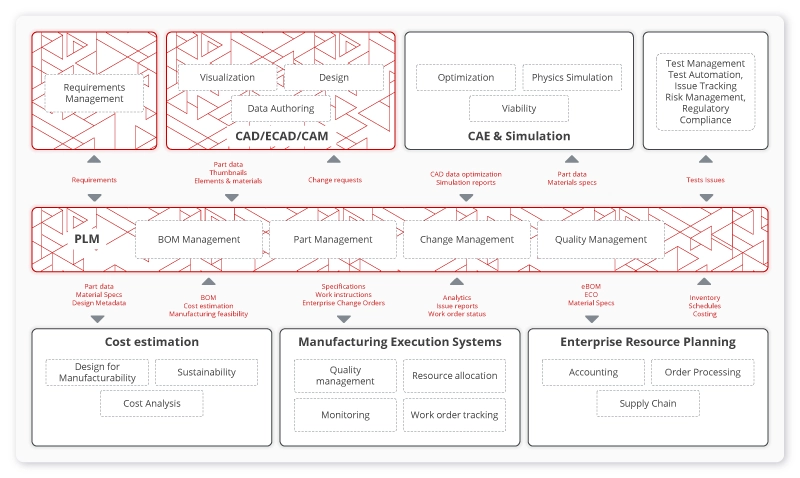
Figure 1: AI reasoning across connected engineering, manufacturing, and enterprise data domains within the digital thread
This level of interoperability enables end-to-end lifecycle intelligence, where decisions are informed by a complete system context—not isolated data sources.
System Engineering–Driven Consulting and Delivery Model
A key factor in the success of this transformation is AMC Bridge’s ability to combine deep engineering technology expertise with a proven, system engineering–driven delivery model.
AMC Bridge combines a system engineering–first consulting model with deep knowledge of the underlying technologies that power modern engineering ecosystems—including CAD, simulation, ERP systems, system integrations, 3D visualization, computational geometry, and PLM platforms, with particular expertise in Aras.
This foundation enables AMC Bridge to design and deliver production-ready solutions that operate reliably in complex, real-world engineering environments. The approach is grounded in detailed analysis of workflows, identification of system gaps, and iterative solution design aligned with program priorities. It emphasizes:
- Rapid iteration and continuous feedback
- Close collaboration with domain and engineering experts
- Balance between agility and governance
- End-to-end ownership from architecture through implementation and deployment
- Focus on building scalable, production-grade systems
The result is not just a conceptual architecture, but a robust and fully operational solution—grounded in real engineering practice, enabled by deep technical expertise, and proven in mission-critical environments.
How the Digital Thread Works in Practice
Across the lifecycle, engineering and manufacturing activities are transformed into connected, data-driven workflows:
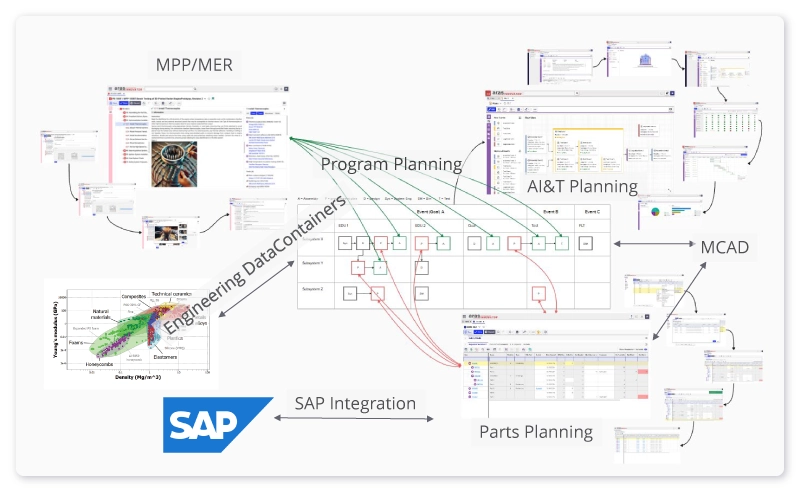
Figure 2: Digital thread execution connecting planning, engineering, manufacturing, and test workflows
Program Planning
- Visual, drag-and-drop planning structures
- Flexible models that adapt to each program
Systems Engineering
- Bi-directional integration with systems engineering tools
- Real-time synchronization of requirements and architectures
Design and Simulation
- Multi-level product structures with embedded simulation data
- Baselines capturing evolving configurations
Procurement and Manufacturing
- Integration with ERP systems (e.g., SAP)
- Planning against a live, continuously evolving BOM
Assembly, Integration, and Test
- Dynamic planning of AI&T sequences
- Real-time execution data capture with automatic system feedback
These capabilities transform engineering into a continuous execution model, rather than a sequence of disconnected phases.
Capturing Knowledge as a Strategic Asset
Beyond data, the client’s digital thread captures engineering knowledge as an integral part of the system itself. Design intent, decisions, and lessons learned are embedded directly within workflows, transforming knowledge into a persistent, reusable organizational asset.
AI-assisted tools further support structured knowledge capture, standardization, and reuse, continuously enriching the system with context and strengthening long-term learning capabilities.
What Changed—and Why It Matters
The transformation enabled:
- A unified digital thread across engineering and manufacturing
- End-to-end traceability across lifecycle stages
- Real-time visibility into system state
- A scalable AI-ready data foundation
Most importantly, the client shifted from static, document-based reporting to continuous, data-driven decision-making.
What Makes This Approach Different
At the core of this approach is AMC Bridge’s deep engineering expertise and practical understanding of how complex systems are designed, integrated, and operated in real-world environments. This knowledge enables more precise solution design, accelerates implementation, and ensures strong alignment with operational needs.
This transformation is enabled by a combination of capabilities:
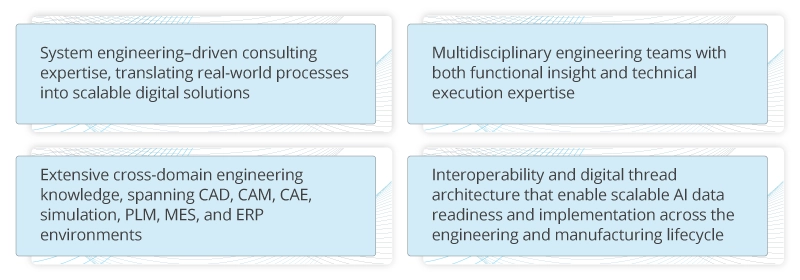
Figure 3: Core capabilities enabling digital thread and AI readiness in complex engineering environments
Together, these capabilities enable faster, more effective implementations and create systems that are designed for long-term evolution—not one-time deployment.
What This Enables Next: Practical AI in Engineering
With a structured digital thread in place, enabled by AMC Bridge as a unified and accessible data foundation, AI can begin to be applied to real engineering workflows. This represents an initial set of high-value tasks that AI can perform on top of the unified, accessible data foundation, opening the door to more advanced capabilities over time, including:
- Querying systems using natural language
- Identifying risks and missing components
- Running simulations, automatically analyzing results, and generating actionable outputs
- Automating documentation and reporting
- Generating complete engineering packages
AI is not introduced as a separate system, but as an extension of the digital thread, embedded directly into engineering workflows.
The Client Perspective
Beyond the delivery itself, the client’s experience speaks to the quality of execution and depth of collaboration behind the transformation:
“It’s a pleasure to work with AMC Bridge. Our users enjoy the discovery process because AMC Bridge comes with great interface mock-ups. It’s clear there has been a lot of thought about the solution between meetings. The development meetings are well run and we can see progress every week. The development plans are well thought out and the team is well managed. The solutions are well done and exceed our user’s expectations.”
— Digital Engineering Director
“The AMC Bridge team has a high level of attention to detail in both solution architecture and execution. They have consistently identified important questions that we had not adequately addressed in the past. This has been a huge boon in helping us understand our own needs and get aligned with AMC Bridge on expectations for the solutions.”
— Digital Engineering Lead
“The AMC Bridge team is very knowledgeable about Aras Innovator. They provide very valuable insight, do excellent work, and are great communicators. They are a joy to work with and we appreciate how thorough and prepared they are for every meeting.”
— Data Scientist and Product Lead, Digital Engineering Center
Summary
The Client’s transformation demonstrates that success in complex engineering and manufacturing environments needs a shift from disconnected tools to fully integrated digital systems.
It requires:
- A system engineering–driven approach
- Interoperable digital thread architecture
- Structured data foundations
- Continuous alignment between engineering and execution
By prioritizing structure, interoperability, and system understanding, the Client has established a scalable foundation for AI data readiness and implementation—unlocking continuous improvement across the full product lifecycle.
About AMC Bridge
AMC Bridge is a trusted software technology partner for engineering, manufacturing, and construction enterprises, whether they are actively pursuing AI-driven digital transformation or only beginning to recognize its potential. We help organizations to move beyond experimentation and achieve consistent ROI by delivering production-ready software and end-to-end solutions for their transformation journey.
We design, build, and integrate enterprise-grade software – applications, workflow extensions for CAD/PLM/BIM, data integrations, AI-enabled features – and deploy them with monitoring and lifecycle management so they remain reliable over time. Our services include assessing data readiness; preparing and unifying product and project data; and embedding AI into the workflows teams use every day. With 25+ years of industrial software expertise and deep ecosystem partnerships, including Aras, Autodesk, Bentley, Dassault Systemes, PTC, Siemens, Tech Soft 3D, and others, we empower enterprises to move confidently from experimentation to operational AI at scale. For more information, visit amcbridge.com.