Posted by PBC Today—When to leaping headfirst into adopting AI, some firms are understandably cautious, but risk missing out on the gains.
The construction industry is at a crossroads. Faced with rising costs, labour shortages, and increasing pressure to meet sustainability goals, construction firms are being asked to do more with less. At the same time, they’re sitting on a goldmine of data—ranging from pre-construction estimates and proposals to design documentation like BIM models, construction site scans and photos, project/ scheduling documentation, and sensor feeds—yet much of it remains underutilised.
This is where Artificial Intelligence (AI) comes in. AI isn’t just a buzzword or a futuristic concept. It’s a practical tool that can help construction businesses unlock efficiency, reduce risk, and make better decisions. But despite its promise, many firms are still hesitant to take the first step.
Understanding the Hesitation
At AMC Bridge, we’ve worked with companies across construction, manufacturing, and engineering, and we’ve seen the same concerns arise over and over again. Businesses are unsure whether AI will deliver a return on investment. They worry about the quality and fragmentation of their data. They lack in-house expertise and fear the disruption that change might bring.
These concerns are valid. AI implementation isn’t plug-and-play. It requires time, budget, and a clear strategy. But the risks of inaction are even greater, including falling behind competitors, missing out on efficiency gains, and struggling to scale.
In our experience, the most common blockers include:
- Uncertainty about ROI: Will the investment pay off?
- Data silos and poor data quality: Is the data usable?
- Skills gap: Who will lead the AI initiative?
- Cultural resistance: How will teams adapt?
- Security and compliance: Is our data safe?
We understand these fears because we’ve helped clients work through them. And we’ve seen firsthand how the right approach can turn hesitation into momentum.
AI in Action: Real-World Use Cases
AI is already delivering measurable results in construction and adjacent industries. Across our collaborations, we’ve seen how targeted AI applications can unlock efficiencies, reduce manual effort, and improve decision-making.
Take, for instance, a client in the AEC sector who had amassed gigabytes of historical construction data—ranging from proposals and reports to BIM documentation. Each time a new proposal was needed, teams had to manually sift through old files or start from scratch, leading to delays and inconsistencies. In close collaboration with the client and based on their specific needs, we implemented an AI-powered knowledge base that leverages Retrieval-Augmented Generation (RAG) and OCR to process legacy documents and extract relevant information. The result? By embedding this intelligence into chat-based applications, the client can now generate proposals more quickly and accurately, with better alignment to past work, streamlining collaboration and reducing overhead.
Another example highlights how AI can enhance safety and risk prevention in infrastructure management. A client responsible for inspecting and maintaining critical infrastructure, such as bridges, tunnels, and public buildings, faced challenges with traditional inspection methods. Manual reviews were time-consuming, prone to human error, and often reactive, identifying issues only after visible damage had occurred.

To address this, we collaborated with the client to develop and implement an AI-powered structural inspection solution based on Convolutional Neural Networks (CNNs). The system analyzes images captured from routine inspections, whether taken manually or via drones, and automatically detects early signs of structural anomalies, such as cracks, corrosion, or deformation. By transforming raw visual data into actionable insights, the solution enables inspectors to prioritize high-risk areas, schedule timely maintenance, and prevent potential failures before they escalate.
This proactive approach not only enhances public safety but also reduces inspection costs and extends the lifespan of critical assets. Integrated seamlessly into the client’s existing workflows, the solution demonstrates how AI can move beyond monitoring to empower smarter, faster, and more informed decision-making in construction and facility management.
The construction industry is steadily advancing its use of AI to enhance productivity and innovation. Lessons from manufacturing, where a strong focus on automation, precision, and data-driven processes has accelerated AI adoption, illustrate the broader potential of these technologies across the built environment.
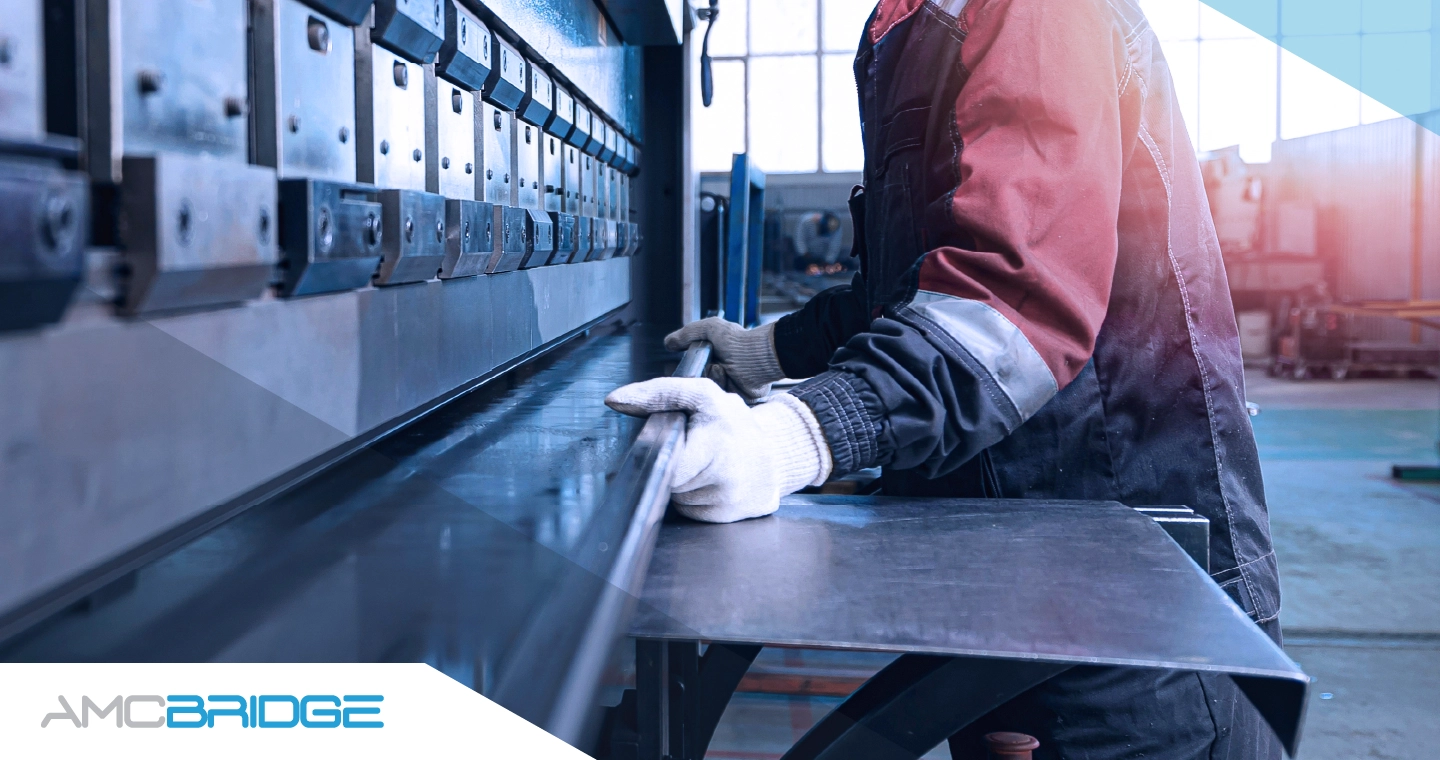
To better understand what’s possible, it’s worth looking at how similar challenges are being addressed in manufacturing. For example, a sheet metal processing company faced a complex problem: optimizing their bending operations. With multiple tools suited to different part specifications—such as material type, dimensions, and bend angles—the manual selection process was slow and heavily dependent on operator expertise. We developed an AI-driven recommendation system that analyzes historical bending data and part characteristics to suggest the most suitable tooling in real time. This solution not only improves production speed and accuracy but also lays the groundwork for broader AI integration across their smart factory ecosystem.
In another case from the digital manufacturing software space, a client developing tools for mechanical design encountered limitations when analyzing PCB files. Gerber files, commonly used in PCB manufacturing, often embed critical specifications like layer thickness and hole plating as visual elements rather than readable text. This made cost estimation and GCD (Geometry, Component, and Design) extraction difficult, especially when supplementary documentation was missing. To address this, we built an AI-powered computer vision solution capable of interpreting non-textual design elements directly from drilling legend images. This automated extraction process enables accurate cost assessments and expands the client’s capabilities to support electronic component manufacturers more effectively.
These cross-industry successes offer valuable insights for construction firms. While manufacturing may be further along in its AI journey, the challenges and opportunities are strikingly similar—complex processes, fragmented data, and the need for faster, smarter decision-making. The good news? Many of the AI solutions already proving their value in manufacturing can be adapted to the construction context.
Practical applications in construction are already emerging, including:
- AI-powered site surveys using drones and 3D scanning for faster, more accurate data capture.
- Predictive analytics to forecast delays, cost overruns, and safety risks.
- Generative design to optimize layouts for cost, performance, and sustainability.
- AI-assisted progress tracking to reduce reporting time by up to 40%.
- Predictive maintenance for heavy equipment, reducing downtime and extending asset life.
These aren’t theoretical concepts; they’re real solutions, already in use or in development, that are transforming how construction firms plan, build, and manage projects.
How to Get Started with AI
For companies unsure where to begin, our advice is simple: start small, but start smart.
Choose a pilot project with a clear, measurable goal, like reducing inspection time by 20% or improving proposal turnaround by 30%. Use the data you already have. Involve cross-functional teams from the start, like site managers, engineers, IT, and finance. And build governance into the process early, addressing data privacy, ethics, and compliance.
AI success isn’t just about technology. It’s about having the right strategy, resources, and mindset.
Lessons from the Field: AMC Bridge’s Role
At AMC Bridge, we specialize in helping companies move from AI curiosity to AI capability. Our role is to translate business needs into AI-powered solutions that integrate seamlessly with existing workflows. We bring global best practices to local markets, ensuring that each solution is tailored, scalable, and sustainable.
We’ve developed a standardized framework for AI adoption that includes:
- Business case development and ROI modeling.
- Data preparation and model training.
- Integration with existing systems and tools.
- Ongoing support and optimization.
Our AI Center of Excellence and Research team has delivered dozens of technology demonstrations, from AI-powered construction takeoff tools to hard-hat detection systems and architectural chatbots for Revit.
The Future of AI in Construction
Looking ahead, we expect to see wider adoption of AI across project controls, safety, and sustainability. Firms that start experimenting now will be better positioned to adapt, compete, and thrive.
AI won’t replace people, but it will empower them. It will help project managers make better decisions; engineers design smarter systems, and site teams work more safely and efficiently.
The question is no longer whether AI has a place in construction. The question is: are you ready to lead?
Final Thoughts
For construction businesses, the best way forward is to start small, measure results, and build on success. Partnering with experienced AI practitioners can help turn potential into performance.
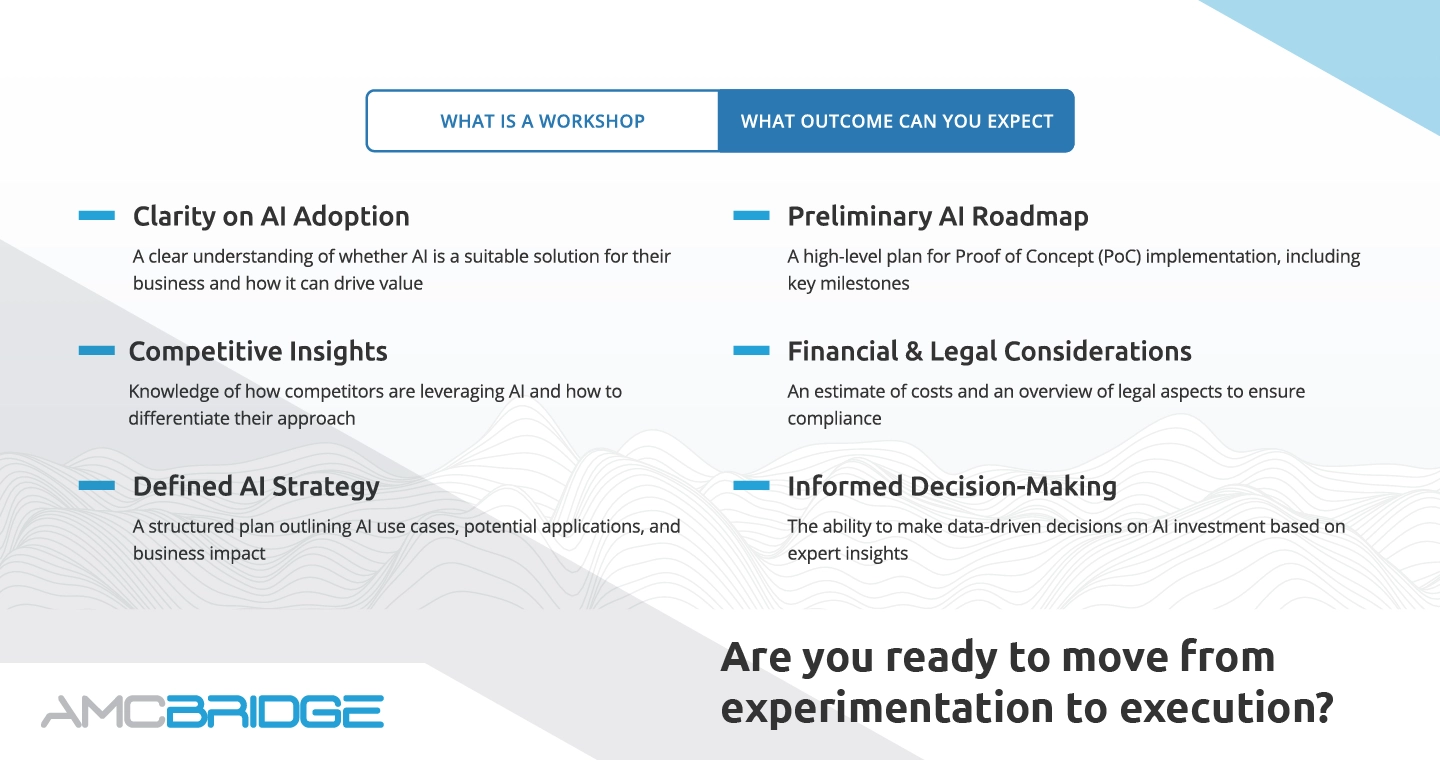
If you’re ready to explore what AI can do for your business, we invite you to join one of our complementary AI workshops designed to turn ideas into action and strategy into results.
Read the material on PBC Today.